


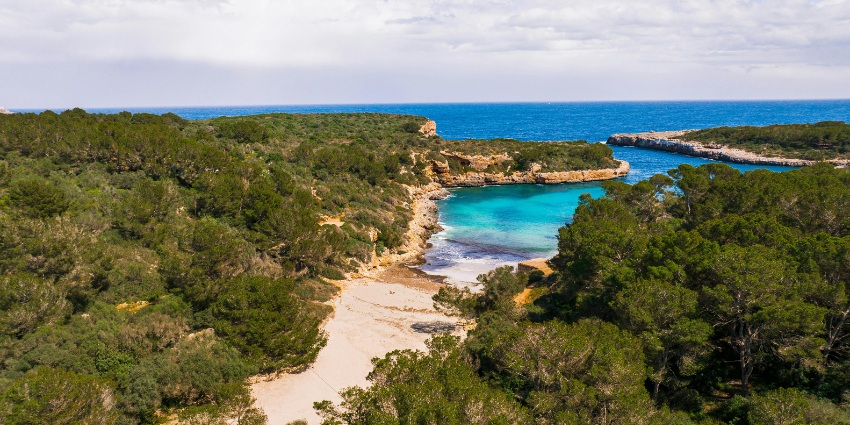
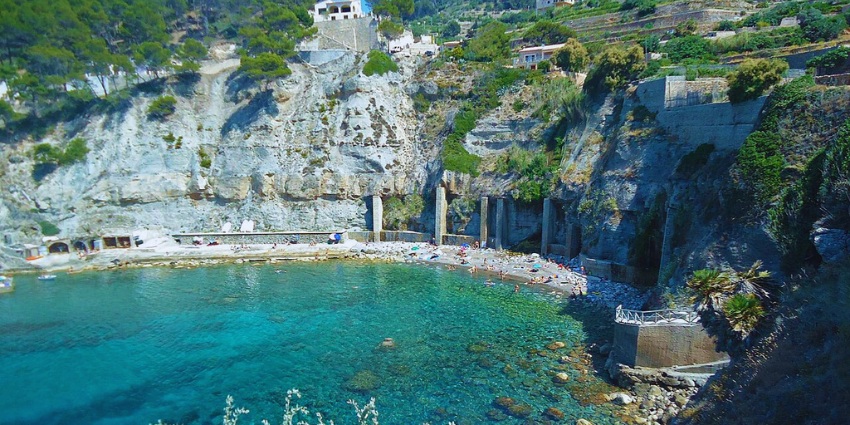
Mallorca has more than 300 coves, but the ones in every guidebook (Cala Millor, Cala d’Or, Es Trenc) are also the most crowded in summer. Between the main coastline and the most inaccessible cliffs lies another island: that of Mallorca’s hidden coves, with no car park, no beach bar and no lifeguard, where the only sound is water against rock and where, with luck, you share the swim with no more than four or five other people.
Reaching them takes effort. Some require walks of 30 to 60 minutes along unmarked paths; others can only be reached by boat or kayak. And that is exactly what keeps them as they are: undeveloped, uncrowded and with a landscape that has barely changed in decades. The effort of getting there is, in fact, the best filter against the crowds.
In this guide to Mallorca’s secret coves you’ll find a selection organised by area (east, south, north and west), with the real walking time to each one, what to expect, the best time of year to enjoy them in near-solitude and the practical tips to avoid any nasty surprises. We start on the east coast, the closest to Porto Cristo and to the underground caves that have shaped this part of the island.
East coast: wild coves near Porto Cristo
The coastal strip between Porto Cristo and Portocolom hides some of Mallorca’s best-preserved unspoilt coves. The terrain is karstic (the same limestone that forms the area’s underground caves) and the coast is cut into dozens of small, deep inlets where the water takes on impossible turquoise tones.
Cala Magraner. About 15 km from Porto Cristo, this cove barely 60 metres wide is wedged between pine-covered cliffs. Access requires a walk of about 40 minutes from the signposted gate on the rural track. There are no facilities whatsoever: no shade, no bins, no drinking water. The seabed is sand with rocks and the water is clear enough to see the bottom several metres down, making it a good spot for snorkelling, especially around the rocks on either side. Next to it lie two even smaller coves, Cala Pilota and Cala Virgili, reachable on foot from the same area: the three form a circuit you can do in a morning if you have good footwear.
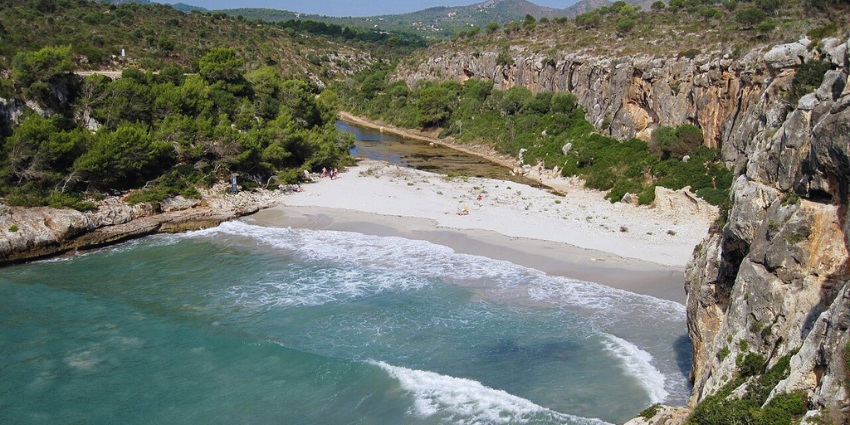
Cala Varques. Probably the best known of the area’s “secret coves”, a contradiction explained by social media. Despite its growing popularity it still has no direct road access and no facilities, and you reach it after a 20–25-minute walkalong a flat path. What sets it apart, beyond the water, is its natural rock arch visible from the shore and the small caves that open in the side cliffs. The same karstic geology that forms the great tourist caves in the area works here on a smaller scale, creating hollows and tunnels you can explore by swimming.
South coast: cliffs and turquoise waters
The south coast, especially around the municipality of Santanyí, is home to some of the island’s most photogenic coves. The most accessible are already well known, but quieter options remain for anyone after uncrowded beaches in Mallorca.
Caló des Màrmols. One of the most isolated coves on the whole island. It sits at the mouth of the Torrent des Màrmols, on the far south of Santanyí. The beach is barely 20 metres long, with white sand and intensely blue water. The problem (or the advantage) is the access: by land you have to walk about 5 kilometres along an unsurfaced track with very little shade. By sea you can reach it by kayak or boat from Cala Figuera or Portopetro, turning the outing into a half-day activity. Bring plenty of water: in summer those 5 shadeless kilometres are no joke.
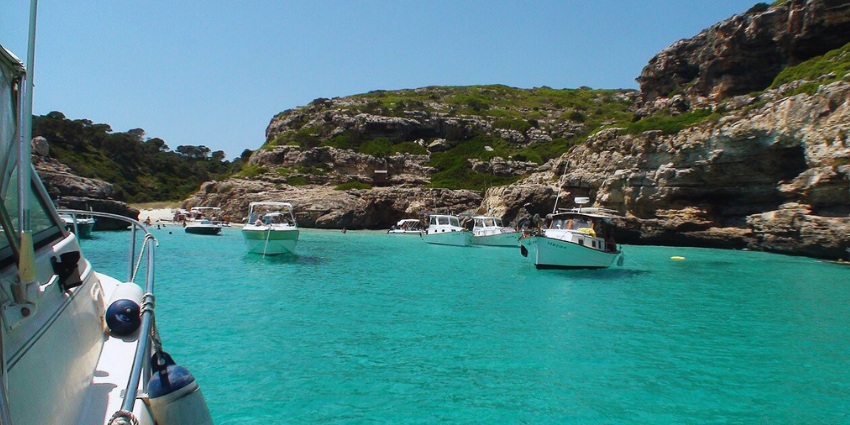
Cala S’Almunia. More accessible than Caló des Màrmols but just as spectacular. You descend steps carved into the rock from the clifftop to a small cove, with fishermen’s huts built against the rock wall and water that looks straight off a Caribbean postcard. It is right next to the better-known Caló des Moro, so in July and August it can get busy; outside high season it goes back to being the quiet spot it has always been.
Most of Mallorca’s hidden coves have no facilities at all: no shade, no drinking water, no lifeguard, and in many cases no mobile signal. Bring everything you need, take your rubbish with you and respect the surroundings. Whether they stay unspoilt depends on whoever visits them.
North coast: Tramuntana meets the open sea
The north coast is dominated by the Serra de Tramuntana, a UNESCO World Heritage Site since 2011, whose cliffs drop straight into the sea. The coves here are wilder and the water tends to be a little cooler, but the scenery is unrivalled.
Cala Tuent. Hidden deep in the Tramuntana, it is just a few kilometres from Sa Calobra but receives a fraction of its visitors. A narrow, winding road descends from the mountains to a pebble beach surrounded by pines. It has a single restaurant beside the beach (unusual for coves of this kind) and is a good starting point for hikes through the range.
West coast: the cliffs of Calvià and Andratx
Cala en Basset. Near Sant Elm, on the far south-west of the island. You reach it after a 30–40-minute walk from the village. It is a cove of flat rocks, ideal for lying in the sun and slipping straight into the water, with views of Dragonera Island that alone justify the walk.
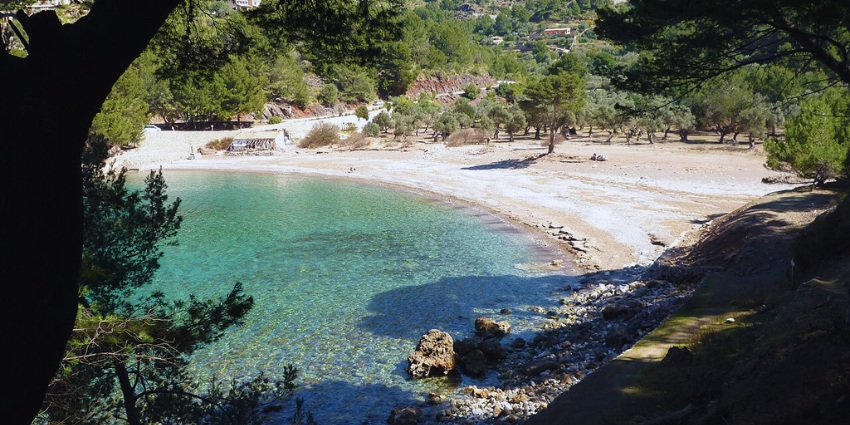
Cala Banyalbufar. In the village of the same name, in the western Tramuntana, a small rocky cove is reached by descending steps from the centre. The water is deep and crystal clear, and the landscape of stone terraces tumbling to the sea is unique on the island. It is not a beach for small children (there is no sand and you enter the water over rock), but for adults after a swim in a singular setting it is hard to beat.
When to visit Mallorca’s hidden coves
The difference between enjoying an unspoilt cove almost alone or sharing it with fifty other people almost always comes down to the month you choose.
The best mix of weather, warm water and peace and quiet comes in spring (May to June) and autumn (September and October). The water sits around 22–26 °C, the hours of extreme sun are few and the crowds are far thinner than in high summer. These are also the best dates for combining a swim with hiking in the Tramuntana, since the heat doesn’t bite on the shadeless stretches.
In July and August even the “secret” coves fill up, especially the ones that go viral on social media like Cala Varques or Caló des Moro. If summer is your only option, get there early: arriving before 10 a.m. is the difference between finding a spot and turning back. In winter (November to March) many coves are still reachable on foot and the scenery is spectacular, but the swim is for the brave only: the water drops to 14–16 °C.
How to get there and get around
A hire car is the most practical way to string several coves together on the same trip, since hardly any have a bus stop nearby and the access paths start from rural tracks. For the most isolated southern coves, such as Caló des Màrmols, a boat or kayak from Cala Figuera, Portopetro or Porto Cristo is often the easiest (and most beautiful) way in.
- Proper footwear. Hiking shoes or, at the very least, trainers with good grip. The paths have loose stones and uneven ground.
- Water and food. There are no bars or shops. Bring at least 1.5 litres of water per person and some energy food.
- Water-resistant sunscreen. Factor 50, reapplied every two hours. Many coves have no natural shade.
- A bag for your rubbish. Whatever you bring in, you take out. There are no bins.
- Check the sea forecast. Some coves are exposed to swell from the north or east. In heavy seas, swimming can be dangerous.
From the cliffs to the underground caves
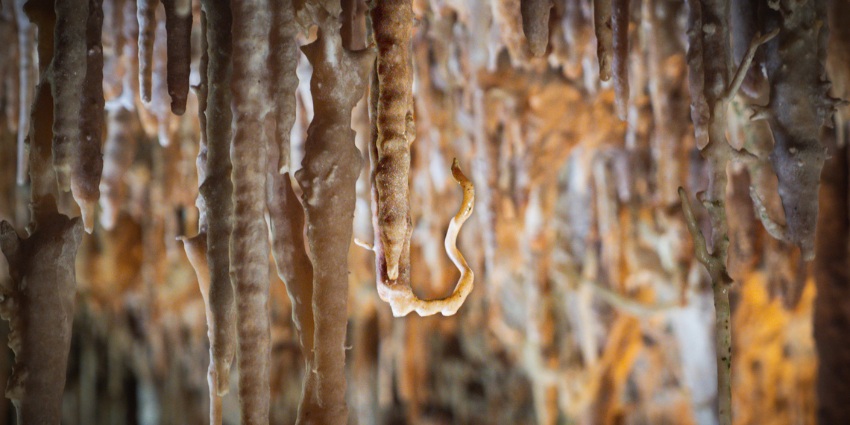
The very geology that has carved these coves (water seeping through limestone over millennia) is the same that, underground, has created the labyrinth of galleries, lakes and formations of the Cuevas dels Hams in Porto Cristo. It is the same karstic process: on the surface it sculpts arches, hollows and inlets, and below ground it raises stalactites and still-water lakes such as the famous Mar de Venecia, where classical music is played live.
If you spend the day exploring the east-coast coves, it is well worth setting aside a morning or an afternoon to see from the inside how water works on rock. You can check opening times and plan your visit to the Cuevas dels Hams, and if you’d like to understand the full process before you head down, we explain it in detail in our article on how caves are formed.
Frequently asked questions about hidden coves in Mallorca
Which is the most unspoilt cove in Mallorca?
Caló des Màrmols, in the south of the island, is one of the most isolated and pristine. Its overland access requires a 5 km walk with no shade, which keeps it virtually empty for most of the year. Only in summer, and mainly by sea, does it receive a moderate number of visitors.
Are hidden coves safe for swimming?
Generally yes, but without a lifeguard the responsibility is yours. The main precautions are: check the sea conditions before you go (swell and currents), do not swim alone, and watch out for submerged rocks at the water’s edge. In coves open to the north, swell can be strong with a tramontana wind.
Can you reach the hidden coves by boat?
Many of them, yes. In fact, it is the most comfortable way to access coves such as Caló des Màrmols, Cala Magraner or Cala en Basset. There are boat-hire companies and group excursions covering these routes, especially from Portocolom, Cala Figuera and Porto Cristo, as detailed in the Barceló guide.
When is the best time to visit unspoilt coves in Mallorca?
From May to June and from September to October. The water temperature is pleasant (22–26 °C), there are fewer hours of extreme sun and visitor numbers are much lower than in July and August. In winter many coves are accessible but the water is cold (14–16 °C).
Are there hidden coves suitable for visiting with children?
Yes, though it pays to choose well. Coves with sand and a short approach, such as Cala Varques, are more comfortable with children than those with rock and steps like Cala Banyalbufar or Cala S’Almunia. In any case, with no lifeguard and no facilities, supervision has to be constant.