


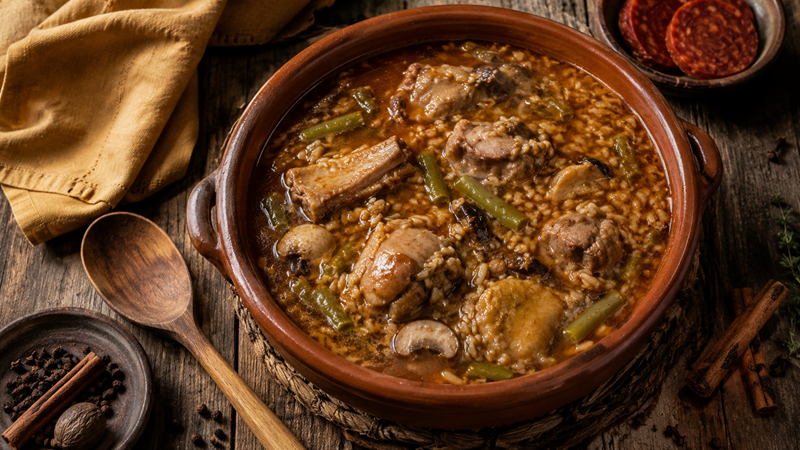
Some dishes define an island. In Mallorca, one of them is arroz brut. It is not a paella, not a risotto, not a conventional soup. It is a brothy rice, loaded with meats, seasonal vegetables and a spice profile that sets it apart from any other rice dish you may have tried in the Mediterranean.
The name comes from the Catalan word “brut”, meaning dirty. And there is nothing derogatory about it — it refers to the murky look of the broth, darkened by the spices, sobrassada and, in the oldest versions, the blood and offal that went into the stew. Today the recipe has been toned down, but it remains a hearty dish, designed for cold months and for gatherings where the table is the centre of everything.
If you are spending a few days on the island and want to try genuine Mallorcan cooking, arroz brut is one of the first obligatory stops.
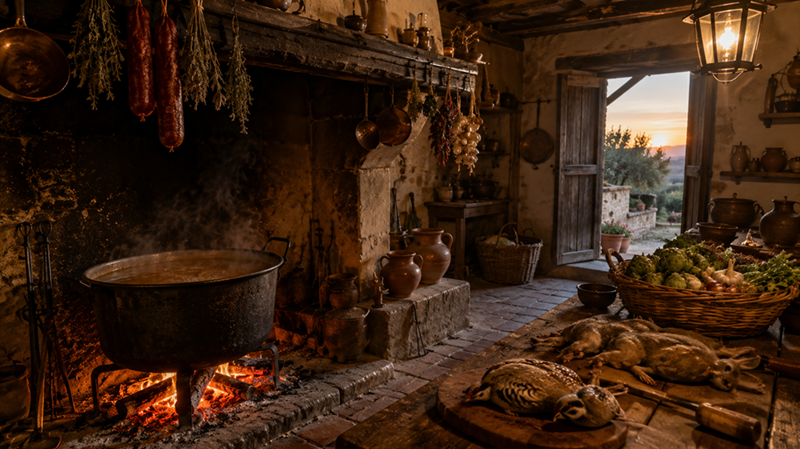
Origins of arroz brut: Mallorcan rural cooking
Arroz brut was born on the possessions, the agricultural estates that for centuries drove Mallorca’s economy. It was a dish born of resourcefulness: cooked with whatever was available on the farm, combining meats from the pig slaughter with small game (rabbit, partridge, turtle dove) and vegetables from the kitchen garden.
Every family and every part of the island had its own version. In the Serra de Tramuntana, seasonal mushrooms were added. On the Pla de Mallorca, more rabbit and pork. In coastal areas, some versions included snails. The common thread was always the same: a spiced broth, rice and a generous mix of proteins and vegetables.
What sets arroz brut apart from other brothy rice dishes is precisely its blend of spices: cinnamon, clove, nutmeg and black pepper. This combination, unusual in Mediterranean cooking, betrays the influence of the trade routes that passed through Mallorca during the Middle Ages. The spices arrived from North Africa and the Middle East, and the island’s cuisine absorbed them naturally.
Today arroz brut is a staple on the menus of traditional restaurants and the star of many local fiestas in Mallorca’s villages, where it is cooked in vast quantities to feed the whole community, as recorded by Bon Viveur in their traditional recipe.
Ingredients for traditional arroz brut
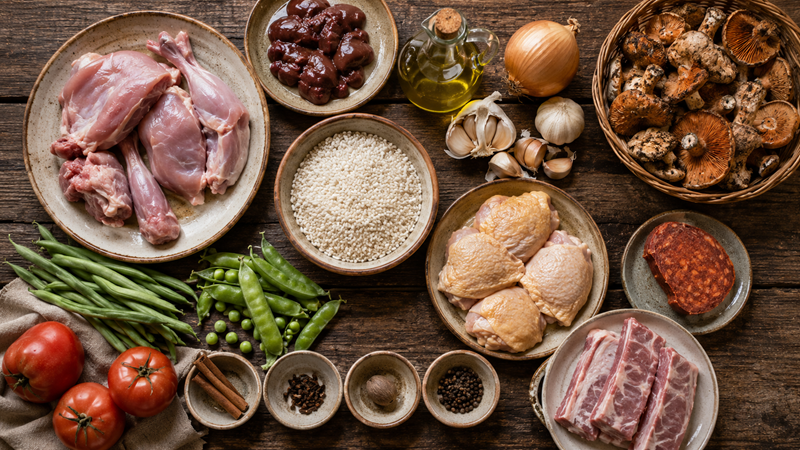
For 4 people, the basic ingredients of a traditional recipe are:
Meats:
- 250 g pork ribs, cut into pieces
- 250 g free-range chicken, cut into pieces
- 250 g rabbit, cut into pieces
- 2 chicken livers
- 1 rabbit liver
Vegetables:
- 1 onion
- 2 ripe tomatoes
- 3 cloves of garlic
- 50 g green beans
- 50 g peas
- 50 g mushrooms (saffron milk caps or button mushrooms)
Base:
- 300 g bomba rice
- 2 litres meat or chicken stock
- 20 g Mallorcan sobrassada
- Extra virgin olive oil
- Salt
Spices (the key to the dish):
- Ground cinnamon
- Ground clove
- Nutmeg
- Black pepper
The proportion of spices is what makes the difference between a decent arroz brut and an exceptional one. There is no single universal measurement — every cook adjusts to taste. But the balance among the four spices should be noticeable without any one dominating.
Arroz brut is called “dirty” because of the murky appearance of its broth, the result of the spices, sobrassada and, in the original recipe, the blood and offal that were added. The blend of cinnamon, clove, nutmeg and black pepper is its hallmark — a spice profile rarely found in Mediterranean cooking.
How to make arroz brut step by step
- Brown the meats. In a large pot (earthenware if possible), heat olive oil and brown the pieces of rib, chicken and rabbit in batches. Remove and set aside.
- Make the sofrito. In the same oil, gently fry the chopped onion over medium heat until translucent. Add the chopped garlic, grated tomato and sobrassada. Cook, stirring, until the sobrassada has melted and the tomato has released its moisture.
- Add the vegetables and meats. Stir in the chopped green beans, peas, mushrooms and the reserved meats. Mix well so everything combines with the sofrito.
- The stock and spices. Pour in the 2 litres of hot stock. Add the spices (a level teaspoon of the mix, or to taste) and salt. Let it simmer over medium heat for about 20 minutes so the meats cook through and the broth absorbs the flavours.
- The rice. Turn up the heat, add the rice and cook for 15–18 minutes uncovered, stirring occasionally. In the last 5 minutes, add the chopped livers.
- Resting. Remove from the heat and let it rest for 3–4 minutes before serving. Arroz brut is served brothy, not dry. If it has absorbed too much stock during cooking, you can add a little more hot stock before bringing it to the table.
Final step: the picada (optional). Some Mallorcan families finish the dish with a picada of garlic, parsley and saffron pounded in a mortar. It is not part of every version, but it adds a punch of flavour and colour to the broth.
Where to eat arroz brut in Mallorca
Arroz brut appears on the menu at most traditional Mallorcan restaurants, especially the cellers (old wine cellars converted into restaurants) and village eateries. Some areas where well-executed versions are easier to find:
- Inca and Sineu: the cellers of the interior are specialists in traditional Mallorcan cooking.
- Manacor and the Llevant region: family restaurants that keep alive the recipes of the old estates.
- Valldemossa and Sóller: in the Serra de Tramuntana, with versions that tend to include more mushrooms.
It is also a regular feature of the fires i festes (fairs and festivals) in the villages, where it is prepared in enormous cauldrons for hundreds of people. If you happen to be at a local fiesta between October and March, there is almost certainly going to be arroz brut.
If you want to keep exploring Mallorcan cooking beyond rice dishes, we recommend our article on lomo con col a la mallorquina, another winter classic on the island.
Frequently asked questions about arroz brut
What does “arroz brut” mean?
“Brut” means dirty in Catalan/Mallorcan. The name refers to the murky, dark appearance of the broth, caused by the spices, sobrassada and, in the original versions, the blood and offal added to the stew. It is not a flaw — it is the dish’s hallmark.
What spices go into arroz brut?
The traditional blend combines cinnamon, clove, nutmeg and black pepper. It is this combination that sets arroz brut apart from any other brothy Mediterranean rice. The proportions vary by family and by area of Mallorca.
Is arroz brut eaten hot or cold?
Always hot. It is a spoon dish, brothy, made for the cold months. It is served in an earthenware pot and eaten freshly made. It is not a dish that improves when reheated, since the rice tends to soak up all the broth if it sits too long.
Can you make arroz brut without meat?
The traditional version uses several types of meat, but vegetarian adaptations exist that replace the animal protein with a variety of mushrooms, artichokes and pulses, keeping the spice base and vegan sobrassada. The result is different from the original, but it preserves the spirit of the dish.