


Underground, the temperature stays at 20°C all year. The same light, the same still lake and the same musical show as in August. The only difference is what you find when you arrive: fewer people, free parking spaces and an island moving at a much slower pace.
This guide explains why autumn works so well, what the tickets cost, how to check whether the cave is open on the day you want to visit, and a few details that are easier to appreciate when nobody is in a hurry.
The essentials
🍂The visit lasts one hour and covers around 500 metres through three caves. Entry is organised by timed slot. Adult tickets cost €18.50 online and tickets for children aged 3 to 12 cost €12.50; children under 3 enter free. The temperature inside remains at 20°C throughout the year, so the autumn experience is exactly the same as in summer. The caves open daily from April to October. Between November and March there are closed days, and the current calendar is always available on the website.
Why autumn is the best time to visit
Because the visit stays the same while everything else changes
This is the main point. At a beach, viewpoint or mountain trail, October gives you a different version of the place: different light, temperature and atmosphere. A cave does not work that way.
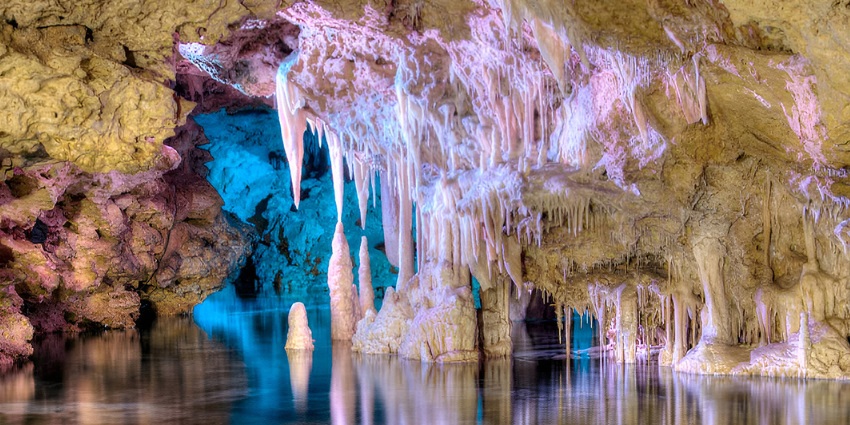
The 20°C inside does not depend on the weather outside, and neither do the humidity or lighting. The water of the underground Sea of Venice is just as still in November as it is in July. The formations took millions of years to reach their present shape and pay no attention to the seasons.
In autumn, you are not seeing a lesser version of the visit. You are seeing exactly the same thing with fewer people in front of you.
Because August has queues and October is much quieter
In July and August, the mid-morning time slots fill up and the car park gets busy early. October and November are far more relaxed: parking is easier, groups are smaller and the guide has more time to answer questions.
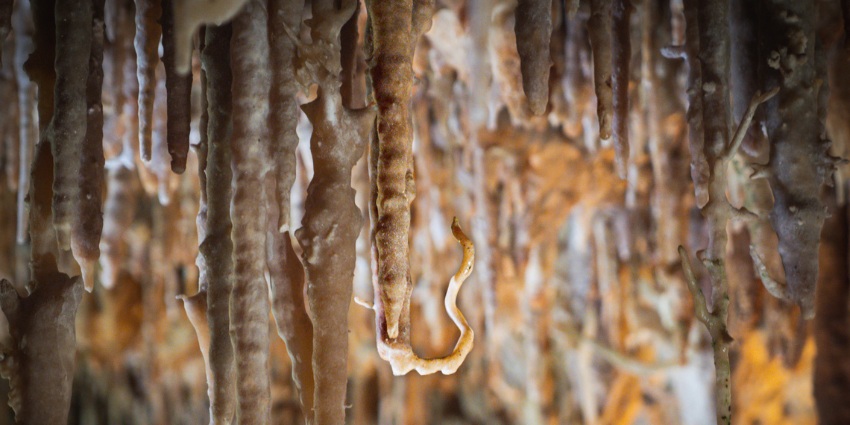
The difference is especially noticeable in the narrower chambers. With a smaller group, you can stop and properly study the hook-shaped formations. They are as fine as thread and need to be seen up close.
Because the weather outside is Mallorca at its best
In October, daytime highs on the island are usually around 22–24°C and the sea still holds the summer warmth. You can combine a morning in the cave with an afternoon at the beach without the August heat that forces everyone into the shade at midday.
November is a little cooler, but short-sleeve days are still common, and the east coast becomes genuinely peaceful. If you are planning your route, our Porto Cristo guide covers everything within five minutes of the cave.
Because it is the plan that survives a rainy day
Rain does arrive occasionally in the shoulder season. That can quickly disrupt the plans of anyone who came to Mallorca with the beach in mind.
The cave is indoors. You will not get wet, the visit is not cancelled and the temperature stays the same whatever the weather. It is literally the plan that works best when the rest of the day has lost its plan.
Autumn prices: the same all year
There is no low-season rate because there is no low-season version of the experience. These are the 2026 prices:
| Ticket | At the ticket office | Online |
| Adult, aged 13 and over | €19.50 | €18.50 |
| Child, aged 3 to 12 | €13.50 | €12.50 |
| Age 0 to 2 | Free | Free |
Buying online saves €1 per ticket and is the only general-public discount. Children under 3 enter free, with a limit of two per accompanying adult aged 18 or over. Balearic Islands residents receive a €2 discount per ticket on presentation of ID, but only at the ticket office.
If you would like to add Dinosaurland, it is on the same site, a two-minute walk away. The combined Dinos & Cavesticket costs €26 per adult and €20 per child online. Autumn is particularly good for the combination because the park is outdoors and far more comfortable at 22°C than at 35°C.
Full details are available in the ticket and travel guide.
How to check whether the cave is open on your chosen day
The caves open daily from April to October. Between November and March there are closed days, so check before setting off during those months.
The caves open in the morning and close in the afternoon, but the opening days change by month. The reliable place to check is the official dates and visiting-times calendar, which is always kept up to date.
The quickest method is even simpler: the available time slots for your chosen day appear when you buy the ticket. If a slot can be booked, visits are running that day. Choose the time that suits you and you will not have to accept whatever is left when you arrive.
🎟️Choose your day and time slot at tickets.cuevasdelshams.com. Booking online saves €1 per ticket and gives you a reserved arrival time, which is especially useful for the popular mid-morning slots.
What you will see inside
The route covers around 500 metres on foot through three different caves, accompanied by a guide and always in the same order.
It begins in the Round Cave. Millions of years ago it was a sealed chamber; today it is open to the sky and has become a garden with native birds flying freely. This first stop is particularly pleasant in autumn: at 22°C and without the August sun, you will want to linger.
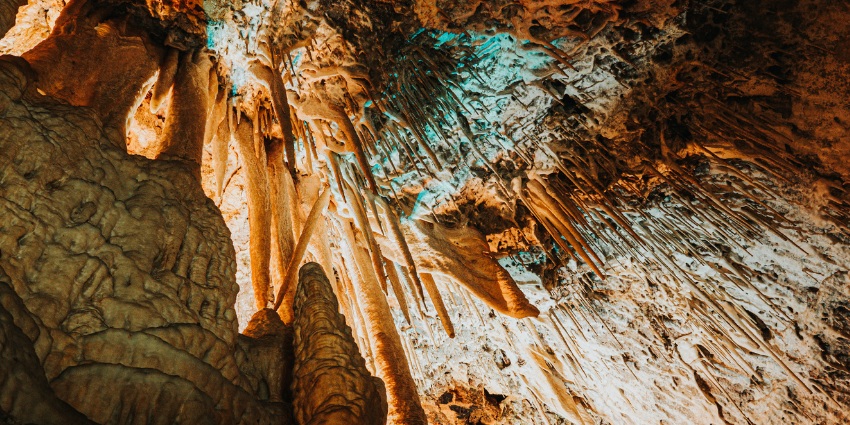
Next comes the Blue Cave, the newest section of the route, where the documentary “Discovering the Past” explores Mallorca’s earliest inhabitants. This section contains Samson’s Columns, the Plains of Fra Mauro and the Pit of Hell. In the auditorium, GENESIS is projected directly onto the rock, taking viewers from the Big Bang to the present day.
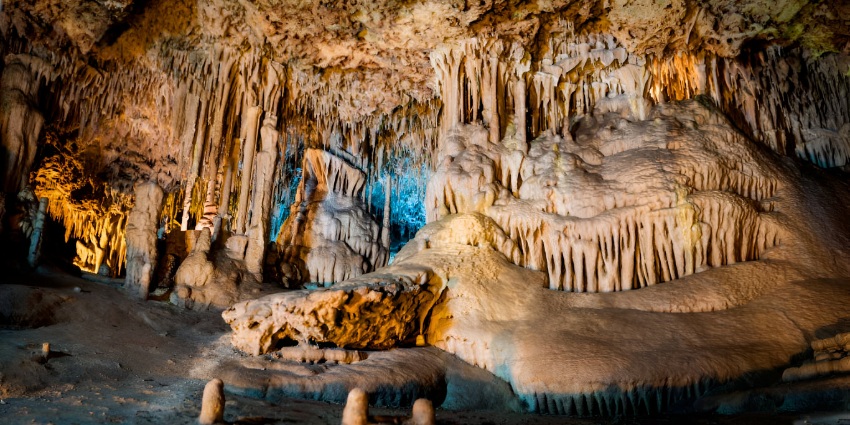
The visit ends in the Classic Cave, with twelve galleries, the Hall of the Owls and the underground Sea of Venice, where the musical show takes place. The water is completely still and the chamber’s acoustics do the rest. The show is included in the ticket and does not require a separate reservation.
Five facts about the caves
These stories are even better when the group is small and there is time to ask questions:
- They were discovered while looking for something else. In 1905, Pedro Caldentey Santandreu was searching the area for onyx when he found the entrance. He was not looking for a cave; he was looking for stone.
- The name is not a metaphor. “Hams” means fishhooks in Mallorcan and literally describes what grows inside. The delicate formations begin by growing downwards like ordinary stalactites, then curve and turn upwards again. A hook. They are found in the Dream of an Angel chamber and are what makes this cave unique in the world. We explain the process in how stalactites and stalagmites form.
- The first chamber was once a cave and then stopped being one. The Round Cave remained sealed for millions of years until its roof collapsed. Today, it is the only part of the route with open sky overhead.
- The rock controls the thermostat. The constant 20°C is not air conditioning. It comes from the thermal inertia of being underground. The cave ignores summer and winter equally.
- Photography is allowed, but without flash, tripod or selfie stick. There is also free Wi-Fi, which is quite an achievement at this depth.
Practical information before you visit
The route includes 217 steps up and 148 down, with resting points along the way. Keep this in mind if an older person is joining the group. Pushchairs cannot be taken inside; there is a storage area beside the ticket office, and baby-changing facilities are available on site.
As for clothing, the constant 20°C means whatever you are already wearing in October or November will usually be fine. In August, visitors notice the change when entering in a T-shirt. In autumn, the indoor and outdoor temperatures are much closer.
The caves are on the Ma-4020 road from Manacor to Porto Cristo, at kilometre 11, with free parking at the entrance and none of the August pressure in autumn. Without a car, take the TIB 401 bus from Palma to Cala Millor, which stops at the site.
If you are visiting with children, age guidance and details of each section are available in the family guide to the Cuevas dels Hams.
Frequently asked questions
Are the Cuevas dels Hams worth visiting in autumn?
Yes. For many people, it is the best time of year. The visit is identical to summer because the caves stay at 20°C all year, but the groups are smaller, parking is easier and the guide has more time for questions.
Are the caves open in October and November?
They open daily from April to October. Between November and March there are closed days, so check the official calendar before travelling during those months. The quickest way is to try to buy a ticket: if time slots are available, visits are running that day.
Is it cold inside in winter?
No. The temperature stays at around 20°C throughout the year because it depends on the surrounding rock rather than the weather outside. In October and November, the difference between inside and outside is actually smaller than in summer.
Are there low-season discounts?
Prices stay the same all year because the experience does too. Booking online saves €1 per ticket. Balearic residents receive a €2 discount per ticket on presentation of ID at the ticket office.
Do you need to book the musical show separately?
No. It is included in admission and takes place during the visit beside the Sea of Venice. What you should reserve is your timed entry slot, because capacity is limited and online booking lets you choose the time instead of accepting whatever remains on arrival.
What can you do in Mallorca in autumn when it rains?
The cave is the most direct answer: it is indoors, unaffected by the weather and stays at the same temperature. To fill the day, the Dinos & Caves combined ticket adds Dinosaurland on the same site.
How long does the visit take?
Exactly one hour, covering around 500 metres on foot through three caves with a guide accompanying the group. With the combined ticket, allow roughly three hours for the full experience, including the walk between attractions and a break to eat.
Can you combine the visit with the beach in October?
Yes. Porto Cristo beach is five minutes away by car, the sea still holds the summer warmth and there is no need to hide from the midday heat. A morning in the cave and an afternoon at the beach is one of the best plans at this time of year.
What autumn gives you
In August, people often enter the cave to escape the heat, in a full group with somebody behind them waiting to move on.
In October, you enter for a different reason: because you genuinely want to. Being able to stop in front of a hook-shaped formation that took millions of years to curve, without anybody rushing you, is not included as a line on the ticket price. But it is what people remember.
Choose your day at tickets.cuevasdelshams.com.