


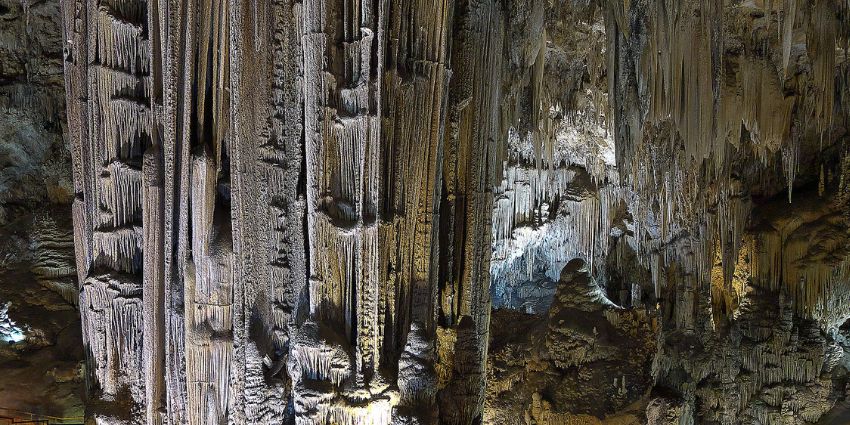
Beneath Spain’s northern coast lies a cave with more than 200 kilometres of passages, a shaft that drops over a kilometre and a half, and an underground chamber big enough to hold more than ten football pitches. These are the largest caves in Spain, and you can’t visit almost any of them.
This guide splits the two worlds apart. First, the record-breakers: the longest cave, the deepest one and the biggest chamber, and what it takes to get inside. Then the great show caves you can walk through without any caving experience, region by region, from Cantabria to the Balearic Islands. Practical tips and FAQs round it off.
🕳️The largest cave in Spain is the Alto del Tejuelo system in Cantabria, with more than 222 kilometres of passages. The deepest is the Torca del Cerro del Cuevón in the Asturian Picos de Europa, at 1,589 metres. Neither is open to the public; the great caves you can visit include Ojo Guareña, El Soplao, Valporquero, Nerja and the Gruta de las Maravillas.
| Cave | Where | Why it’s big | Open to visitors? |
| Alto del Tejuelo system | Cantabria | Over 222 km of passages, Spain’s longest | No, exploration only |
| Ojo Guareña | Merindad de Sotoscueva (Burgos) | Over 100 km, 14 linked caves | Partly |
| Torca del Cerro del Cuevón | Cabrales (Asturias) | 1,589 m deep | No |
| Torca del Carlista | Karrantza (Biscay) | One of Europe’s largest underground chambers | No |
| El Soplao | Herrerías, Valdáliga and Rionansa (Cantabria) | Over 20 km of passages, including the mine | Yes |
| Cueva Huerta | Teverga (Asturias) | Around 14 km of passages | Yes |
| Nerja Cave | Nerja (Málaga) | 4,823 m surveyed | Yes |
| Gruta de las Maravillas | Aracena (Huelva) | Over 2 km, 1,200 m open to visitors | Yes |
How do you measure the size of a cave?
When a caver calls a cave big, they could mean one of three things. The most common is length: the total of every passage that has been surveyed, metre by metre. The second is depth, the vertical difference between the highest entrance and the lowest point. The third is the sheer volume of its chambers.
That’s why the rankings shift every few years. A cave doesn’t grow, but what we know about it does. Each expedition adds new passages to the survey, and every so often a team finds the squeeze that links two neighbouring caves, turning them overnight into one much larger system.
Almost all of these caves sit in limestone. Rainwater, slightly acidic, dissolves the rock over hundreds of thousands of years, opening cracks, galleries and shafts. This karst landscape is especially extensive along Spain’s northern coast, which is why the big records are found there. For the full story, read how caves are formed.
The largest caves in Spain, one by one
Alto del Tejuelo system (Cantabria): the longest cave
This is Spain’s great underground labyrinth: more than 222 kilometres of interconnected passages, according to the explorers’ own website. One of its entrances is the Torca de Bernallán in San Roque de Riomiera, where the Sejca caving club began work in 1996.
For almost three decades, Spanish and international teams have been linking nearby caves. The most recent major connection came in January 2024, adding 13 kilometres in one go and pushing the system past the 200 km mark. Some of its chambers are the size of a football pitch.
It isn’t a show cave and you can’t go in on your own. It’s exploration territory, with vertical pitches, tight squeezes and flooded sections that only experienced cavers with technical kit can tackle.
Ojo Guareña (Burgos): over 100 kilometres, with a door you can open
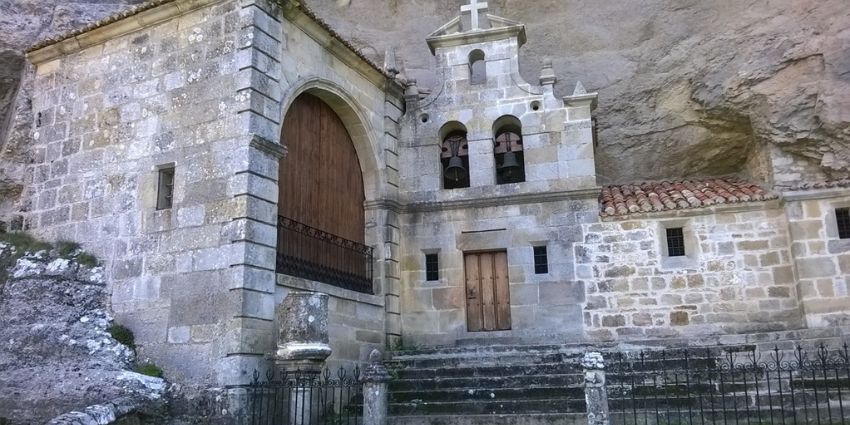
In the north of Burgos province, the river Guareña vanishes underground. Below lie more than 100 kilometres of passages spread across 14 interconnected caves, protected as a Natural Monument covering 13,850 hectares.
Unlike the other giant systems, you can actually get in here. The cave and hermitage of San Bernabé is visited with a guide and suits all ages, with rock engravings and folk paintings from the 18th and 19th centuries. For something more adventurous, Cueva Palomera offers a caving walk through almost untouched passages; it isn’t suitable for under-12s.
Routes and information are run from the Casa del Parque in Quintanilla del Rebollar, around 7 kilometres away. For more in the region, see our tour of the caves of Castilla y León.
Torca del Cerro del Cuevón (Asturias): the deepest
In the central massif of the Picos de Europa, in the municipality of Cabrales, an entrance at 2,019 metres above sea level opens onto Spain’s deepest cave: 1,589 metres from top to bottom, one of the deepest on the planet.
A Franco-Spanish team first reached the bottom in 1998. Getting there takes days of descent down vertical shafts, underground camps and the kind of logistics many cavers compare to a high-altitude mountaineering expedition.
Torca del Carlista (Biscay): the giant chamber
Under Peña Ranero, in the Karrantza valley and within the Armañón Natural Park, lies one of the largest underground chambers in Europe. It measures around 500 metres long and more than 240 metres wide, with a ceiling that disappears into the darkness dozens of metres overhead.
The first attempts to descend date from the late 1950s. It remains a cave for experienced cavers only: the way in is a vertical shaft with no visitor facilities at all.
The great show caves of Spain
The record-breakers may be out of reach, but Spain has huge caves with walkways, lighting and guides. These are the big ones you can explore, region by region.
Cantabria: El Soplao
Miners digging for zinc and lead at the La Florida mines stumbled across it in the early 20th century. Counting the old mine, El Soplao has more than 20 kilometres of passages, and it’s famous for its helictites: stalactites that grow in every direction, ignoring gravity, and in some chambers cover the ceiling, walls and floor.
The standard tour lasts around an hour on walkways that are wheelchair accessible. The adventure tour, roughly two and a half hours, takes you with helmet and headlamp into unprepared sections, for ages 12 and over, in groups of no more than 20. Inside it’s between 12 and 14 °C.
Cantabria is also one of the richest regions in the world for cave art, with Altamira leading the way. We cover it in the caves of Cantabria.
Asturias: Cueva Huerta and the art of Tito Bustillo
In Teverga, Cueva Huerta has around 14 kilometres of passages and has been a Natural Monument since 2002. There’s a family tour of about 50 minutes and a three-hour guided adventure that follows the underground river.
Asturias is also home to five caves with Palaeolithic art on the UNESCO World Heritage list, including Tito Bustillo in Ribadesella. Find out more in our guide to the caves of Asturias.
Castilla y León: Valporquero
In the mountains of León, in Vegacervera, water has carved out a cave of vast chambers that you explore with a guide. In 2026 there are three routes: the standard one, around 55-65 minutes through five chambers; the long one, 90-100 minutes through seven; and Valporquero Insólito, about three hours in small groups for ages 12 and over, with the first stretch in total darkness by headlamp only.
It opens from March to mid-December, daily in summer and Thursday to Sunday for the rest of the season. Local activity companies also run the full underground stream crossing, which takes several hours.
Basque Country: Pozalagua
In the same Karrantza valley as the Torca del Carlista, Pozalagua cave turned up by chance in 1957 during quarrying work. According to the Basque tourist board, it holds the world’s largest concentration of eccentric stalactites, tangled like roots across the ceiling of the main chamber. Tours are guided.
Andalusia: Nerja and the Gruta de las Maravillas
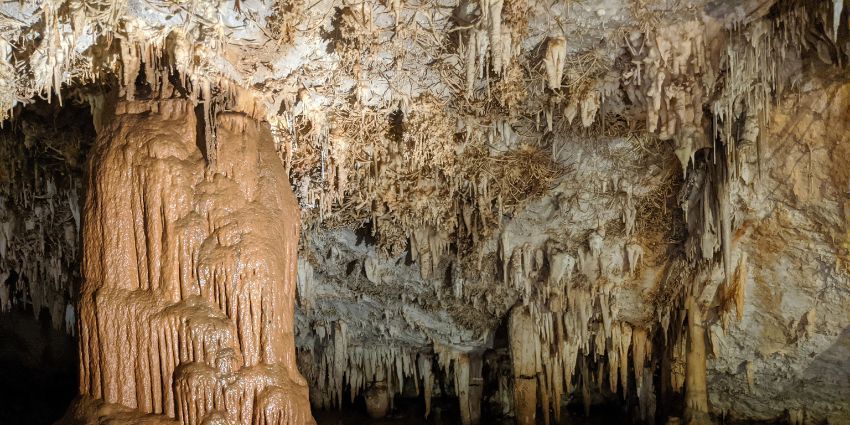
The Nerja Cave, in Maro on the Costa del Sol, has 4,823 metres of surveyed passages and is one of the largest caves in Andalusia. It was discovered in 1959 and opened a year later, marking the first edition of its Music and Dance Festival, held every summer since. More in our article on the Nerja caves.
The Gruta de las Maravillas has a quirk: you walk in from the middle of Aracena, a town in the province of Huelva. Of its 2,130-odd metres of passages, 1,200 are covered on a guided tour of about 45 minutes past underground lakes. It has welcomed visitors since 1914. More in underground Andalusia.
Valencia region: a river under the hills
In La Vall d’Uixó, Castellón, the Coves de Sant Josep are explored almost entirely by boat, steered by boatmen, on a trip of about 45 minutes. It’s one of the longest underground river routes in Europe and a completely different experience from walking a cave.
Catalonia, Murcia and Navarre
The map keeps going. Catalonia has its own network of show caves, which we explore in Catalonia underground. In the south-east, Murcia’s karst hides little-known caves, covered in caves and karst in Murcia. And in Navarre, the Zugarramurdi caves blend geology with witch legends.
Balearic Islands: the Cuevas dels Hams
On Mallorca’s east coast, just outside Porto Cristo, Pedro Caldentey came across a cave on 2 March 1905 while searching for onyx. Rather than quarry it, he opened it to the public. That was the beginning of the Cuevas dels Hams.
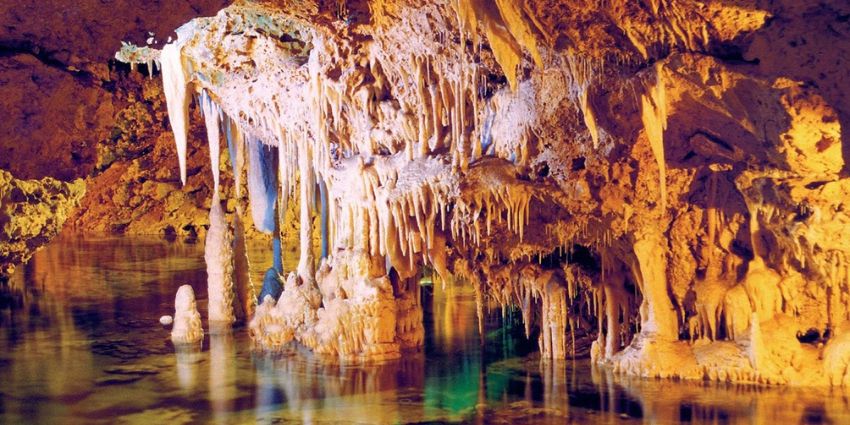
The visit lasts about an hour and takes in three caves along roughly 500 metres. It starts in the Cueva Redonda, a garden open to the sky, continues through the Cueva Azul with its audiovisual shows, and ends in the Cueva Clásica, home to its underground lake, the Mar de Venecia, where a musical show plays out over the water.
On the way to the lake you pass through the Sueño de un Ángel chamber. This is where the “hams” grow, Mallorcan for fish hooks: delicate formations that start growing downwards, then curl and turn back up. They give the cave its name. Inside it’s between 18 and 20 °C all year round. Everything you need to know is in our guide to tickets and opening times.
For cavers: how to get into the big systems
Record-breaking caves aren’t explored independently. The usual route is to join a local caving club, train with them and take out a federation licence, which also gives you the insurance the sport needs. The Spanish Caving Federation (Federación Española de Espeleología) and the regional federations are a good place to look for clubs and courses.
Many of these caves sit within protected areas, where expeditions need permits. And however experienced you are, the basics don’t change:
- Never go in alone, and leave word outside of your route and your expected time out.
- Carry three independent light sources. It’s caving’s golden rule.
- Always wear a helmet, with clothing for damp conditions and 7-14 °C in the northern caves.
- Check the forecast before you go in. A storm outside can flood passages very quickly.
If you’d like a taste without that commitment, adventure tours are the perfect way in: El Soplao’s adventure route, Valporquero Insólito, Cueva Palomera at Ojo Guareña or the Cueva Huerta adventure. Helmet and headlamp are provided and no experience is needed.
Tips for visiting caves in Spain
The temperature inside a cave barely changes all year and sits close to the local annual average. In the north it ranges from 7 °C at Valporquero to 12-14 °C at El Soplao, so pack a layer even in August. Caves on the Mediterranean are milder.
Book ahead whenever you can. Many caves limit numbers to protect their internal climate, and summer and bank holiday slots sell out. Check the season too: several close in winter or only open on certain days.
Footwear matters more than you’d think. Floors are usually damp, so go for soles with decent grip. If you’re travelling with children, check the minimum age for each tour: standard tours usually welcome everyone, while adventure options normally start at 12.
Frequently asked questions about the largest caves in Spain
What is the largest cave in Spain?
The Alto del Tejuelo system in Cantabria, with more than 222 kilometres of surveyed passages, according to its explorers. It isn’t open to visitors: only caving teams go in.
What is the deepest cave in Spain?
The Torca del Cerro del Cuevón, in the Asturian Picos de Europa (Cabrales), at 1,589 metres deep. Its bottom was first reached in 1998.
What is the largest cave you can visit in Spain?
The largest system with areas open to the public is Ojo Guareña in Burgos, at over 100 kilometres. Among the classic show caves, El Soplao in Cantabria stands out with more than 20 kilometres of cave and mine passages.
Can you visit caves in Spain without caving experience?
Yes. There are dozens of show caves with walkways and lighting, and several also run adventure tours with helmet and headlamp for ages 12 and up, no experience required.
How warm is it inside a cave?
Almost the same all year, close to the local annual average. Northern caves are usually between 7 and 14 °C; on the Mediterranean it’s milder, and the Cuevas dels Hams stay between 18 and 20 °C.
Underground, time runs differently
Spain’s great caves are measured in kilometres and centuries, but also in something harder to rank: the feeling of leaving the noise behind and stepping into a place that water was shaping long before anyone was around to see it.
If your trip brings you to Mallorca, that experience is waiting in Porto Cristo. Choose your slot at tickets.cuevasdelshams.com and check opening days on the dates and times calendar.