



In the municipality of Cunday, in Colombia’s Tolima department, there is a cave system that Colombian speleologists regard as one of the richest in mineral formations anywhere in the country. They are called the Cuevas del Edén — the Caves of Eden — and despite the name, getting there is anything but paradise: you need to walk for about two hours along a mountain trail, cross the Tuluní river and descend into a network of galleries that stretches beneath the tropical forest.
What awaits inside makes the effort worthwhile. A route of approximately 940 metres passes through four connected caves, with a density of speleothems that few underground systems in South America can match. Stalactites, stalagmites, columns, calcite curtains and coral-like formations cover ceilings, walls and floors in an unusually high concentration.
This is not a conventional tourist destination. It is a real caving experience, in a setting that still retains much of its natural state.
Where the Caves of Eden are and how to get there
The caves are located in the hamlet of La Camelia, about 12 kilometres from the town centre of Cunday, a municipality in the south of the Tolima department, on the eastern range of the Colombian Andes. The altitude of the area is around 1,200 metres above sea level, with a humid tropical climate that drives constant karst activity.
From Bogotá, the most direct route goes via the road to Melgar and then on to Cunday, a journey of about 4 hours by car. From the town, reaching the caves requires a hike of between 90 minutes and 2 hours along a trail that passes through dense vegetation and crosses the Tuluní river, which can be difficult to ford during the rainy season.
There is no developed tourist infrastructure around the caves. Visits are arranged through local guides who know the terrain and the conditions of the underground system. It is the only safe and responsible way to gain access.
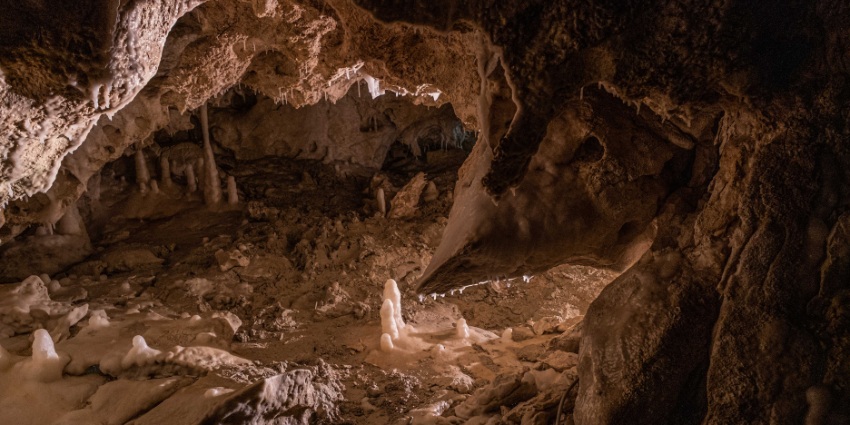
What you will find inside the caves
The Caves of Eden system is made up of four main caves connected to one another. The full route, from the lower entrance to the upper exit, is about 940 metres long and takes roughly 3 to 4 hours, depending on the group’s pace and the stops made to observe the formations.
What makes this system special is the variety and density of its speleothems. The calcium carbonate formations take highly diverse shapes: needle-thin stalactites, stalagmites with concentric layers, columns several metres tall and translucent calcite curtains that, when lit, let light pass through.
In some sections, the walls are covered by formations resembling marine coral, the result of mineral precipitation in environments with high humidity and a constant flow of water. According to data from the Colombian Speleological Society, Colombia has more than 300 catalogued cave systems, and the Caves of Eden rank among those with the highest concentration of speleothems.
The interior maintains a stable temperature of around 18–20 °C and very high relative humidity, close to 90 %. This makes the atmosphere warm and muggy — very different from the cool air of European caves.
The Caves of Eden may hold one of the highest concentrations of speleothems in Colombia. Their 940-metre underground route crosses four caves with formations ranging from needle stalactites to translucent calcite curtains.
Underground wildlife and the natural surroundings
The cave system is far from lifeless. In the galleries closest to the entrances you can find oilbirds (Steatornis caripensis), nocturnal birds that use the caves as a daytime shelter and navigate by echolocation. Their presence is an indicator of a healthy ecosystem, since these birds depend on nearby forests to feed on fruit.
Several species of bats have also been observed, along with cave-dwelling insects and, in the waterlogged areas, small crustaceans adapted to the dark. Cave fauna in tropical environments tends to be more diverse than in temperate climates, precisely because of the stable temperature and the abundance of organic matter carried in by water from outside.
The surroundings are equally valuable. The walk to the caves takes you through Andean humid forest, with tall trees, tree ferns and dense vegetation that maintains the microclimate necessary for the stability of the karst system. Without that forest, the water flow that feeds the interior formations would be disrupted.
Practical tips for visiting
The Caves of Eden are not a theme park. They are an unmodified natural environment, and that calls for some preparation.
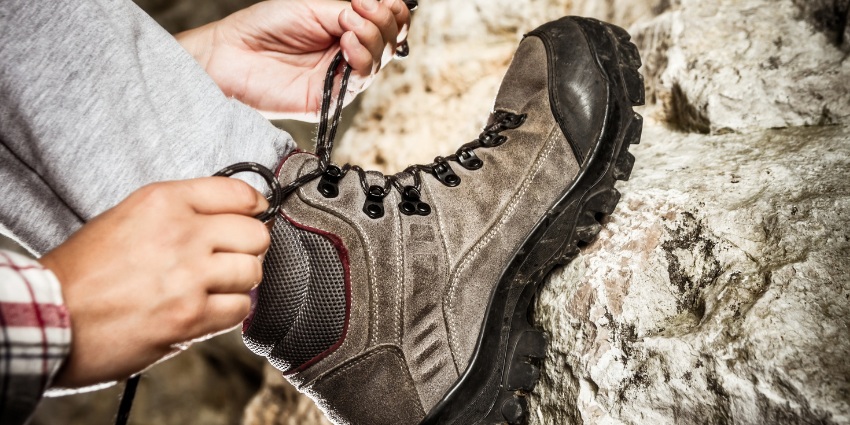
For the approach walk it is best to wear boots with good grip (the terrain is uneven and can be muddy), lightweight clothing that can get wet, and to carry water and some energy food. Inside the cave, the floor is slippery in many stretches and there are sections where you need to crouch or squeeze through narrow spaces.
Basic equipment includes a headlamp or torch with spare batteries (there is no artificial lighting inside the cave), a helmet if the guide provides one, and a change of clothes for afterwards. The humidity inside is such that you will come out soaked.
The best time to visit is during the drier months, generally between December and March, when the level of the Tuluní river is lower and access is safer. During the heavy rainy seasons (April–May and October–November), crossing the river may not be feasible.
If you are interested in learning about other caves with unique ecosystems in South America, we recommend our article on the Cueva del Guácharo in Venezuela, another system where these remarkable nocturnal birds are the stars of the underground experience.
Frequently asked questions about the Caves of Eden in Colombia
Where exactly are the Caves of Eden in Colombia?
The Caves of Eden are in the hamlet of La Camelia, municipality of Cunday, Tolima department, on the eastern range of the Colombian Andes. Access is from the town of Cunday after a hike of between 90 minutes and 2 hours along a mountain trail.
Do you need a guide to visit the Caves of Eden?
Yes, it is essential. There is no signage or infrastructure inside the caves, and the terrain both outside and inside poses risks if you are not familiar with it. Local guides from Cunday organise the expeditions and are familiar with the river conditions and the underground system.
How long does the full route through the Caves of Eden take?
The underground route covers about 940 metres and takes 3 to 4 hours. Including the walk there and back from Cunday, the full activity takes between 6 and 8 hours, so it is best to start early in the morning.
What is the difference between the Caves of Eden and a tourist-ready cave like the Cuevas dels Hams in Mallorca?
The main difference is the level of preparation. The Cuevas dels Hams in Porto Cristo feature designed lighting, accessible walkways, a classical music concert on the underground lake Mar de Venecia and a comfortable guided tour suitable for all ages. The Caves of Eden are an unmodified natural system where the visit is a genuine caving activity requiring physical fitness and proper equipment. Both share the same geological basis — the dissolution of limestone by water — but the experience is completely different.